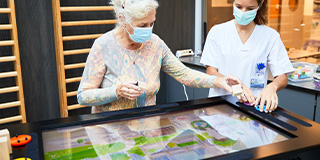
REAplan
A robotic assistance device
with auto-adaptative motorization
REAplan
A robotic assistance device
with auto-adaptative motorization

The principles of motor control
Specifically stimulate motor execution and performance

Upper limb rehabilitation requires a clear understanding of movement decomposition:
- Action planning: Action affordances – Intention & motor planning.
- Motor execution: Movement performance and biofeedback.
Integrating robotic assistance into the therapeutic arsenal enables targeted stimulation of motor execution and performance.
Studies demonstrate that the effectiveness of robotic rehabilitation relies on the ability to intensify therapy by increasing the number of movement repetitions, provided it is integrated into a comprehensive care program where the role of therapists remains essential.
(LO 2010, MEHRHOLZ 2012, POLLOCK 2014)
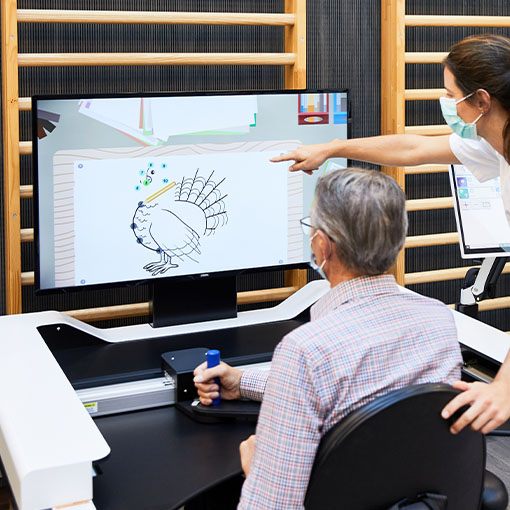
The upper limb
A major challenge for patients’ daily lives
Whether resulting from a stroke, orthopedic trauma, or chronic pain, partial or total upper limb impairments significantly impact patients’ quality of life, leading to difficulties in performing activities of daily living (ADLs) such as eating, washing, and dressing.
REAplan is a robotic assistance device with auto-adaptive motorization dedicated to upper limb rehabilitation management.
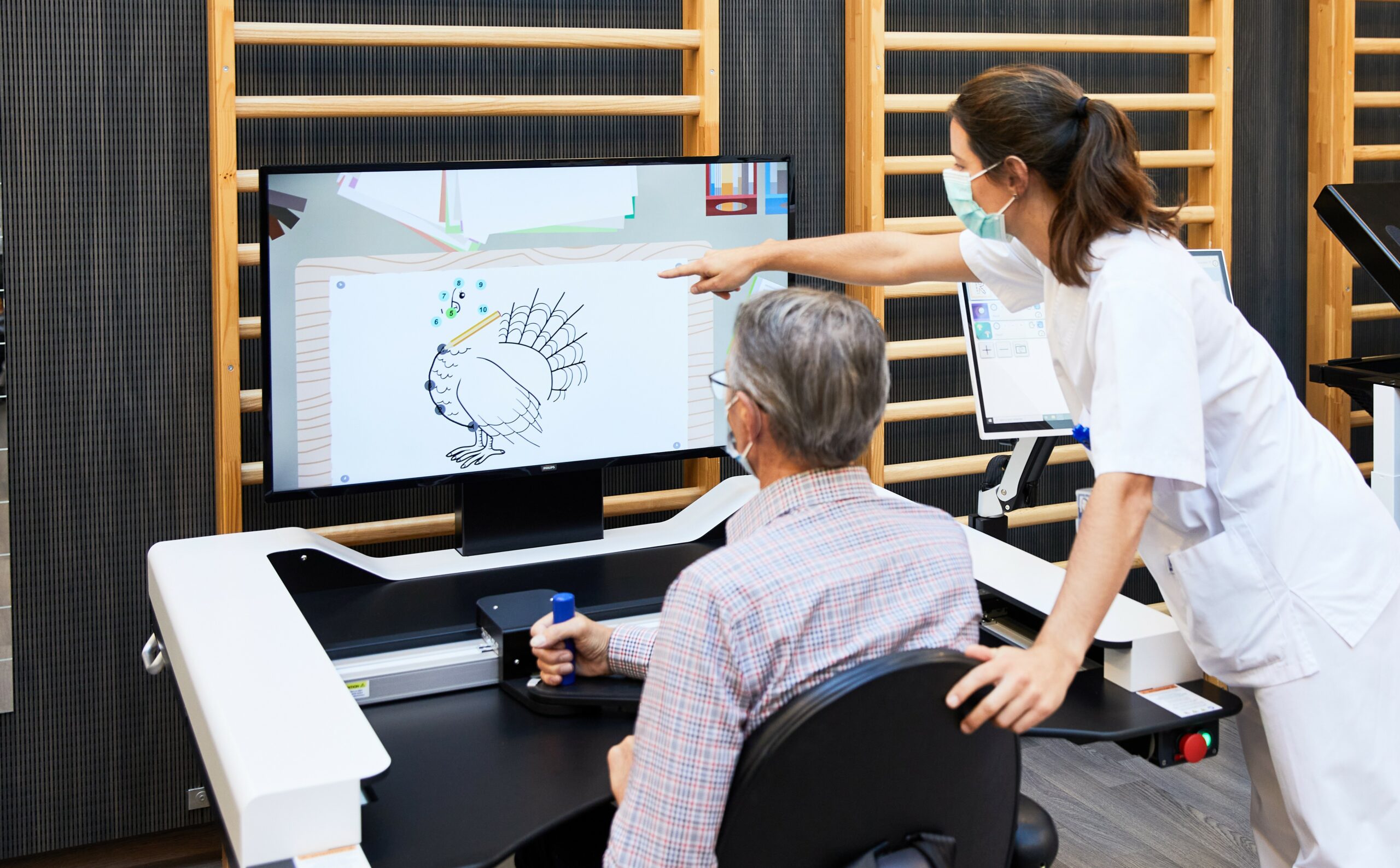
The “End-Effector” approach
A simple and physiological approach
- Simpler, faster setup, leading to better clinical adoption and utilization by therapists. (MACIEJASZ et al. 2014)
- A more progressive approach, enhanced motor learning, and better movement control. (MACIEJASZ et al. 2014)
- A more physiological, hand-led, and less constrained gesture (distinction between gesture and movement). (NOWAK & HERMSDÖRFER, 2009)
- A simpler technical design, enhanced control over movement assistance algorithms, and a higher patient-benefit-to-cost ratio. (MACIEJASZ et al. 2014)
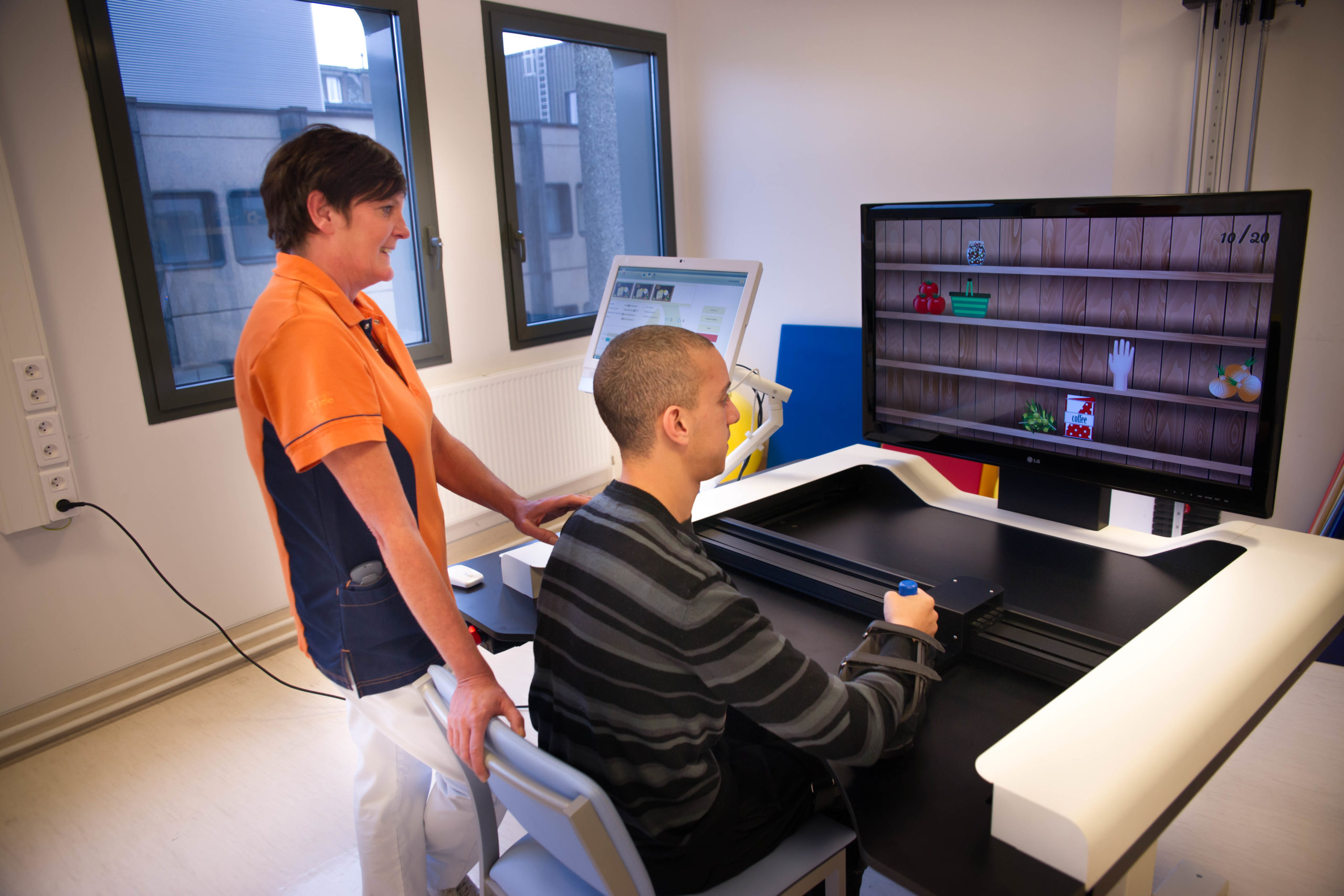
A robotic assistance device
with auto-adaptive motorization
Depending on the patient’s profile, the therapist can select different modes, in a sitting or standing position, thus tailoring the level of difficulty to each patient (motor and cognitive):
- PASSIVE: the device mobilizes the patient within a workspace defined by the therapist.
- ASSISTED-ACTIVE: the patient initiates the movement and the self-adaptive system assists them in completing the action.
- ACTIVE: the patient independently performs a defined movement to achieve the goal set by the activity.
- COUNTER-RESISTANCE: REAplan generates self-adaptive resistance to the patient’s movement to develop force production.
The REAplan device on video

Why REAplan
- A dual-approach strategy: Motor (adjustable assistance) & Cognitive (progressive gamified activities);
- A rehabilitation robot offering a broad spectrum of patient care (neuro-orthopedics);
- Sitting or standing training, with programs tailored to all recovery stages;
- Simple, fast, and comfortable setup for patients;
- Intensive upper limb rehabilitation promoting movement repetition;
- Independent patient practice (under practitioner supervision);
- Comprehensive tracking of the patient’s work and progress;
- Transfer of progress to activities of daily living (ADLs).
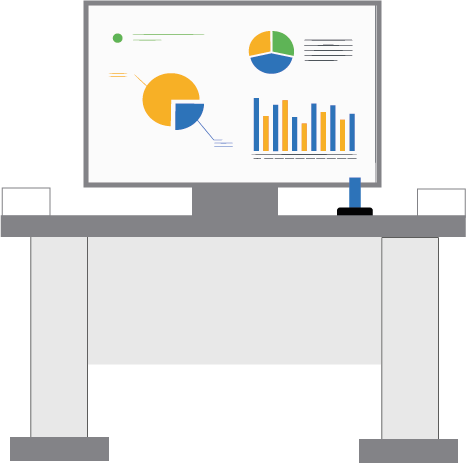
The REALAB
Customized session design
The platform enables the creation of personalized sessions for each patient, leveraging both therapeutic and gamified activities to stimulate motor skills and cognitive function.
The therapist defines the session parameters for each exercise:
- The graspping area;
- The difficulty level;
- The assistance level;
- The assistance speed;
- The counter-resistance force;
- The activity type.
Scientific evidence
Robot-assisted rehabilitation leads to improvements with beneficial effects that persist beyond the treatment phase:
- of motor control;
- of upper limb dexterity;
- of social participation and activities of daily living (ADLs).
DEHEM S. et al. 2019
Gross manual dexterity
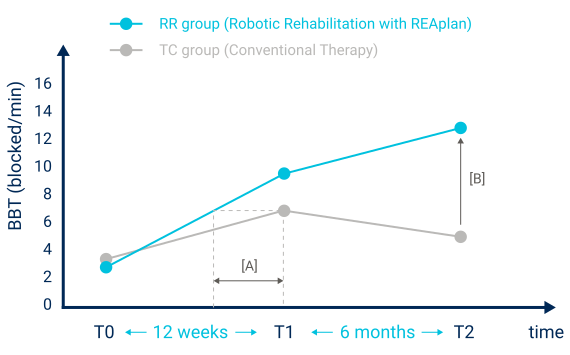
[A] Hospitalization shortened by four weeks (-30%). [B] Overall manual dexterity improved by +150%, with effects maintained or further improved after returning home (6 months post-rehabilitation).
Upper limb motor control
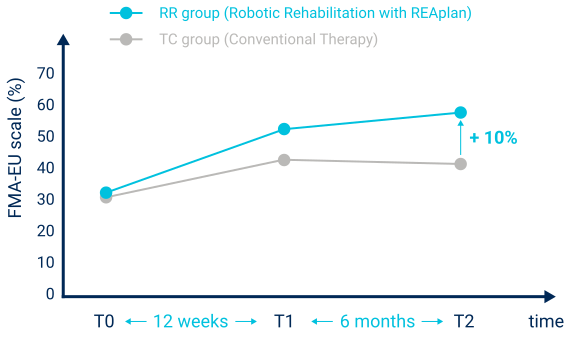
A +10% improvement in motor control/motor function 6 months post-rehabilitation (FMA-UE).
Pathologies treated
Neurological origin
- Stroke (cerebrovascular accident)
- Traumatic brain injury
- Cerebellar syndrome
- Neurodegenerative disease
- Cerebral palsy
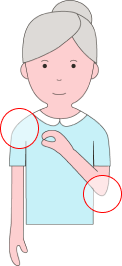
Orthopedic origin
- Shoulder trauma
- Elbow trauma
- Shoulder prosthesis
- Wrist trauma
REAplan in a continuum of care
ARM LAB principle
The ARM LAB is an environment composed of various rehabilitation tools and designed to promote the recovery and reinforcement of complex arm and hand skills.
This concept is based on three fundamental pillars:
- Early and intensive care;
- varied and complementary care and stimulation;
- patient engagement and motivation.
Clinical resources
Discover
our other technologies
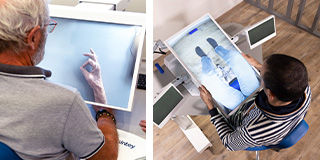
IVS
Intensive Visual Simulation
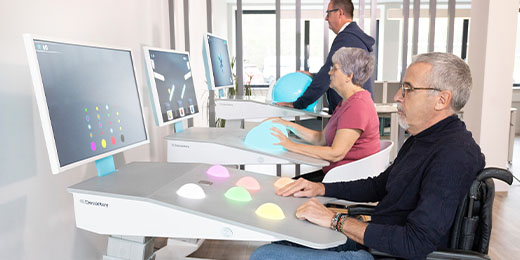
SRT Lab
Self-Rehabilitation Technology
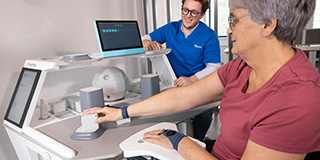
STIIMP
Implicit Induced Stimulation