
Post-stroke rehabilitation plays a crucial role in patient recovery by leveraging the mechanisms of neuroplasticity to restore impaired functions.
This article provides an overview of stroke, its consequences, and the importance of intensive rehabilitation in the recovery process.
Understanding Stroke and Its Consequences
a. Mechanisms of Stroke
There are two main types of stroke:
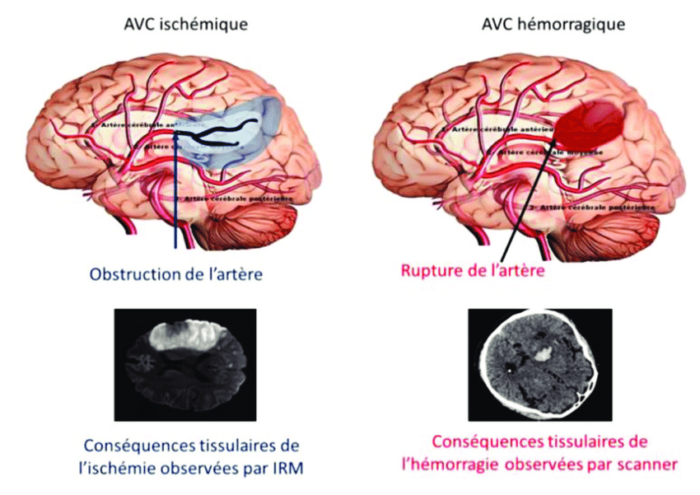
- Ischemic stroke, which accounts for approximately 80% of cases and results from the blockage of a cerebral artery,
- and hemorrhagic stroke, accounting for about 20% of cases, which is caused by the rupture of an artery within the brain (intracerebral hemorrhage) or within the membranes surrounding the brain (subarachnoid hemorrhage) (1).
The specific areas of the brain affected will determine the nature and severity of the observed impairments.
b. Impairments Associated with Stroke
Motor impairments include hemiplegia, which is paralysis on one side of the body, as well as balance and coordination disorders.
Language disorders often manifest as aphasia, which leads to difficulties with comprehension and/or expression.
Cognitive deficits can affect memory, attention, and executive functions.
Other disorders may also occur, such as dysphagia, which involves swallowing difficulties, or hemianopia, which is a loss of vision in one half of the visual field (2).
c. Impact on Quality of Life
A stroke can also lead to a significant loss of independence, affecting daily activities as well as social and professional life. Consequently, it is estimated that approximately 40% of stroke survivors are left with significant long-term impairments (3).
Furthermore, it is widely recognized that 18% to 33% of patients will develop a depressive syndrome following the event (4).
Intensive Rehabilitation: The Key to Post-Stroke Recovery
a. Principles of Intensive Rehabilitation
Post-stroke rehabilitation is built upon three fundamental principles:
- early initiation of care, which involves starting rehabilitation as soon as possible, ideally within 24 to 48 hours following the stroke;
- a multidisciplinary approach, which combines various therapeutic modalities;
- and a personalized program, which must be tailored to the patient’s specific needs.
💡 Please note: International standards recommend three hours of physical rehabilitation per day after a stroke. Furthermore, studies demonstrate that increasing the activity dose is an essential factor in patients’ functional recovery and the maintenance of their independence.
Daily life of a rehab patient
During weekdays
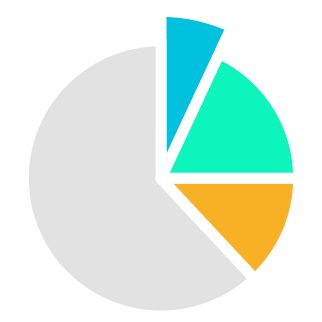
Rest: 22%
Physical therapy: 7%
During weekends
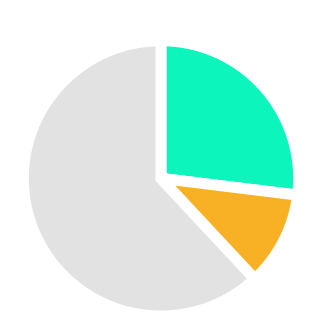
Sleep: 41%
Rest: 21%
b. Rehabilitation Techniques and Tools
Post-stroke rehabilitation mobilizes a multidisciplinary team of therapists, each contributing specific expertise.
- Physical therapists and occupational therapists play a central role in designing exercise programs to strengthen muscles and relearn daily tasks.
- Speech-language pathologists are essential for treating language and swallowing disorders, helping patients regain their communication abilities.
- Adapted physical activity specialists design personalized programs that incorporate muscle strengthening and cardiovascular reconditioning.
- Psychomotor therapists also contribute by working on coordination, balance, and body awareness. Their approach aims to improve body schema and spatio-temporal orientation, which are frequently disrupted after a stroke.
- Neuropsychologists focus on the assessment and rehabilitation of cognitive functions impaired by the stroke, such as memory, attention, language, and executive planning skills.
- Psychologists provide emotional and psychological support following a stroke. They help patients manage anxiety, depression, frustration, or loss of self-confidence, while working to improve their emotional well-being and psychological adaptation.
- Physical Medicine and Rehabilitation (PM&R) physicians coordinate the overall care of the patients. As experts in functional rehabilitation, they assess patients’ motor, cognitive, and sensory abilities to develop a personalized care plan aimed at optimizing their independence. Working closely with the therapeutic team, the PM&R physician adjusts treatments and sets rehabilitation goals based on the patient’s progress. They also collaborate with other medical specialists to adapt medical care and ensure that all aspects of the patient’s health are taken into account.
In addition to therapist interventions, several rehabilitation techniques can be utilized. Rehabilitation robotics, including exoskeletons and movement-assisted devices, intensifies movement repetition. Mental representation techniques aim to stimulate peri-lesional plasticity within the damaged cortical area. Motor imagery allows patients to mentally visualize a movement, while action observation activates mirror neurons by watching movements performed by another person. Mirror therapy uses the reflection of a healthy limb to create an illusion of movement on the affected side. Other techniques can also be incorporated, such as functional electrical stimulation (FES), constraint-induced movement therapy (CIMT), etc. (6). These varied approaches, complementing therapeutic interventions, provide a robust framework for maximizing post-stroke recovery potential.
c. The Role of Brain Plasticity in Recovery
Our brain has long been known to be “plastic.” This concept means that it possesses the ability to perpetually reorganize itself throughout our entire lives. Two mechanisms of plasticity exist: neurogenesis, involving the formation of new neurons, and synaptogenesis, reflecting the ability of neurons to create new connections. Cerebral plasticity is highly active following a stroke (7) and must be stimulated to maximize recovery capacity. Intensive rehabilitation supports this neuroplasticity, enabling the brain to work within the damaged areas and restore certain functions (8).
d. Benefits of Intensive Rehabilitation
As with any form of learning, the more a neural pathway is stimulated through exercise, the easier and stronger the inter-neuronal communication becomes. Consequently, several recent studies have shown that intensive post-stroke rehabilitation leads to significant recovery of motor functions compared to standard rehabilitation (9,10).
However, we know that regaining usable function in the upper limb takes longer and is more challenging, as arm functionality is far more complex than that of the lower limb. As a result, only about 20% of patients will recover sufficient function to use it in daily life (11). Walking is recovered in nearly 80% of patients, even if it is not always perfect (12). Therefore, recovering sufficient and usable function of the upper limb is currently one of the major challenges in rehabilitation and research (6).
Intensive rehabilitation is a key component in the post-stroke recovery process, making it possible to optimize the chances of regaining satisfactory independence and quality of life. Recent advances in neuroscience and rehabilitation technologies open up promising new perspectives. For instance, ongoing clinical studies are exploring the use of non-invasive brain stimulation and artificial intelligence to further personalize rehabilitation programs.
Bibliographie
- Qu’est-ce qu’un AVC ? | Fondation pour la Recherche sur les AVC (s.d.). Consulté le 18 octobre 2024
- Accidents vasculaires cérébraux | www.cen-neurologie.fr. (s.d.). Consulté le 23 octobre 2024
- Accident vasculaire cérébral (AVC) · Inserm, La science pour la santé. (s. d.). Inserm. Consulté 23 octobre 2024
- Medeiros, G. C., Roy, D., Kontos, N., & Beach, S. R. (2020). Post-stroke depression : A 2020 updated review. General Hospital Psychiatry, 66, 70‑80.
- Rehabilitation and recovery — Principles of rehabilitation. (s. d.). National Clinical Guideline for Stroke. Consulté 18 octobre 2024
- Pollock, A., Farmer, S. E., Brady, M. C., Langhorne, P., Mead, G. E., Mehrholz, J., & Wijck, F. van. (2014). Interventions for improving upper limb function after stroke. Cochrane Library.
- Cramer, S. C., Sur, M., Dobkin, B. H., O’Brien, C., Sanger, T. D., Trojanowski, J. Q., Rumsey, J. M., Hicks, R., Cameron, J., Chen, D., Chen, W. G., Cohen, L. G., deCharms, C., Duffy, C. J., Eden, G. F., Fetz, E. E., Filart, R., Freund, M., Grant, S. J., … Vinogradov, S. (2011). Harnessing neuroplasticity for clinical applications. Brain, 134(6), 1591.
- Grefkes, C., & Fink, G. R. (2020). Recovery from stroke : Current concepts and future perspectives. Neurological Research and Practice, 2, 17.
- Veerbeek, J. M., Koolstra, M., Ket, J. C., van Wegen, E. E., & Kwakkel, G. (2011). Effects of Augmented Exercise Therapy on Outcome of Gait and Gait-Related Activities in the First 6 Months After Stroke. Stroke, 42(11), 3311‑3315.
- Lohse, K. R., Lang, C. E., & Boyd, L. A. (2014). Is More Better? Using Metadata to Explore Dose–Response Relationships in Stroke Rehabilitation. Stroke, 45(7), 2053‑2058.
- Nakayama, H., Jørgensen, H. S., Raaschou, H. O., & Olsen, T. S. (1994). Recovery of upper extremity function in stroke patients : The Copenhagen Stroke Study. Archives of Physical Medicine and Rehabilitation, 75(4), 394‑398.
- Jørgensen, H. S., Nakayama, H., Raaschou, H. O., & Olsen, T. S. (1995). Recovery of walking function in stroke patients : The Copenhagen Stroke Study. Archives of Physical Medicine and Rehabilitation, 76(1), 27‑32.